
Posts Tagged ‘dog behavior’
“Fine” is a Four-Letter Word

Have you ever looked at your dog and thought that she looks “fine”? Have you described your own or another person’s pet as “fine” when you describe them to your friends? Beware, the word “fine” is often not so fine!
Read MoreCalming Signals or Stress Signs?

When working with clients, I am often asked about the body language of the dogs that we are working with. One question that comes up, particularly with those who have some background in behavior and training, is about whether certain behaviors we are seeing are Calming Signals or stress signs.
Read MoreClass Policies

Registration Questionnaires It is our goal at Synergy to provide you with the service that will help you and your dog be successful in getting the help you need. To make sure that the class you’ve picked is a good fit for your dog’s behavioral needs, we ask several questions during the class registration process.…
Read MoreThe Misunderstood Muzzle
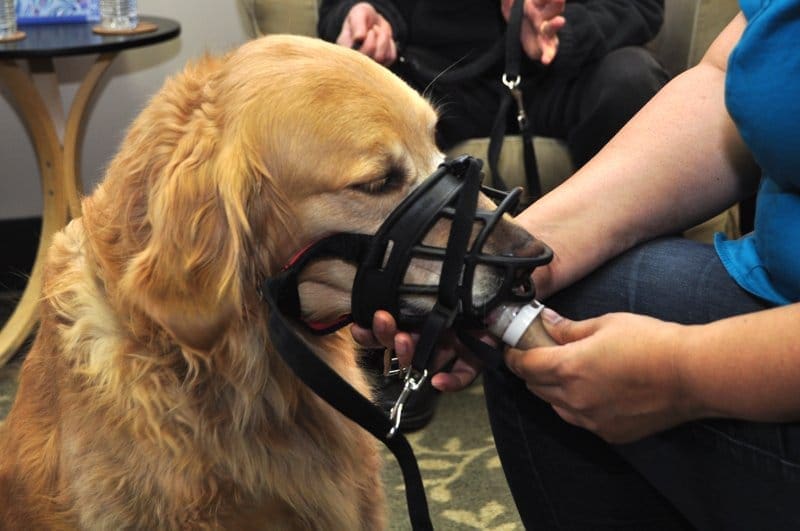
Muzzles are some of the most misunderstood, but most important, tools in dog training. It is a way to keep your dog and others around her safe while providing opportunities for training. A muzzled dog is not a bad dog, and may not even be a dog that bites. It is however, a dog whose people are being proactive and safe.
Read MoreA Note from Dr. Valli – Synergy Snapshot
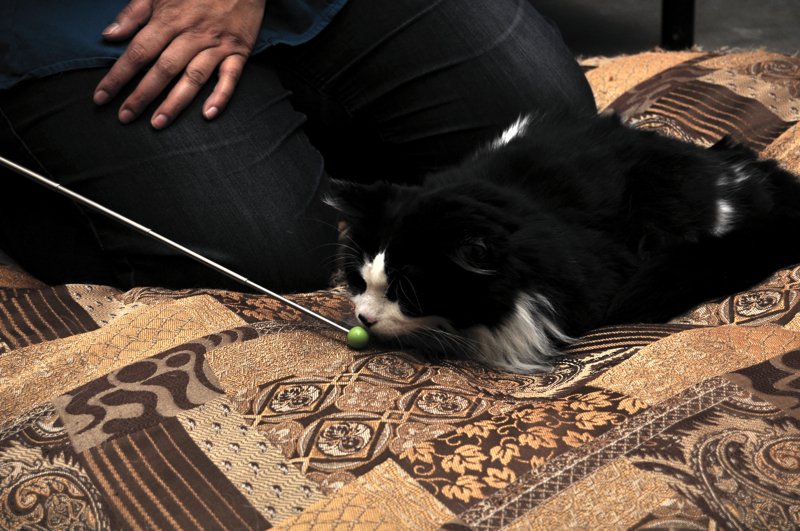
A lot has changed with our practice since our last blog article. Previously, we were doing house call consultations only, and running classes out of dog daycares and boutique pet stores. While we enjoyed doing that, we really wanted a place that we could call “home”. After almost a year and a half of searching, we found a location in NW Portland that worked very well for us, and we named it the Synergy Behavior Center.
Read MoreSay What? Whale Eye

Whale eye occurs when a dog’s head is pointed one way but their eyes are looking at something in a different direction. The whites of the eyes can be seen as an arc. It can be thought of as looking out of the corner of the eye. Dogs who show this behavior are typically concerned about something that is going on around them.
Read MoreTrainers Need Training Too!

I have been assisting with our Reactive Rover classes for several years, but recently I had the opportunity to join the class as a student with my own dog, Ferrous. I love being a student. Not only do I get to spend time with my dogs, which can be in short supply as a trainer, but it gives me a chance to fine tune my techniques and get feedback from my peers.
Read MoreWhen can I stop using the…
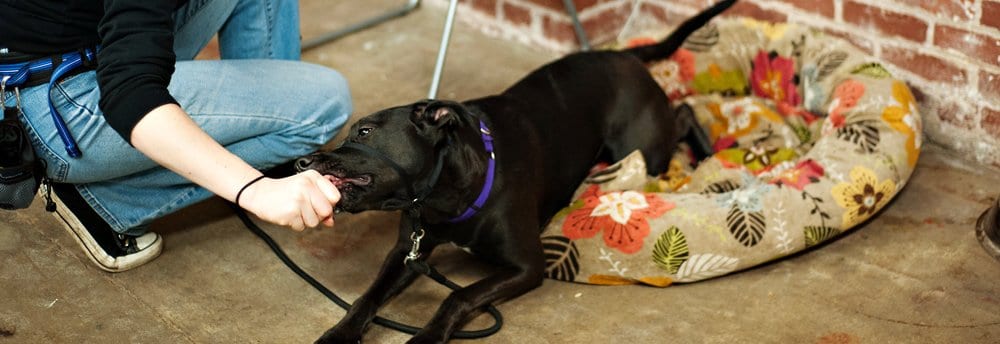
Today I thought I’d address a question that we occasionally get asked by clients…
“At what point can I stop using (the clicker/treats) with my dog for the behavior I am working on improving?”
This is actually a really interesting question to answer since it brings to light several aspects of dog learning and helps everyone understand better why dogs are motivated to do certain behaviors. In the example below (jumping up on the person when exiting the crate) here’s how I answered…
Read MoreWhy does my pet do that?

Have you ever wondered how your dog or cat figures out how to do what? It is because of two types of learning that they are especially good at: associative learning, and learning by consequence.
When working with companion animals, regardless of whether you are teaching obedience cues, working on tricks, or addressing complex behavior problems, understanding the way they learn will make the process easier and more successful.
Read MoreRaindrops Keep Fallin’ on my Head

At my house, neither of my dogs are big fans of the rain, but it has never really been that big of an issue. That is, until the last major rain storm. For whatever reason, Ferrous took one look at the downpour and refused to leave the shelter of our tiny patio.
Read More