
What Can Cat Training Help With?
Cat training can address unwanted behaviors while also teaching your cat skills that make everyday life easier. Because behavior can have many causes, our team considers your cat’s environment, experiences, individual preferences, and responses when developing a training plan.
We commonly help families with:
- Litter box use and inappropriate elimination
- Aggression toward people or other pets
- Fearful or defensive behavior
- Destructive or unwanted scratching
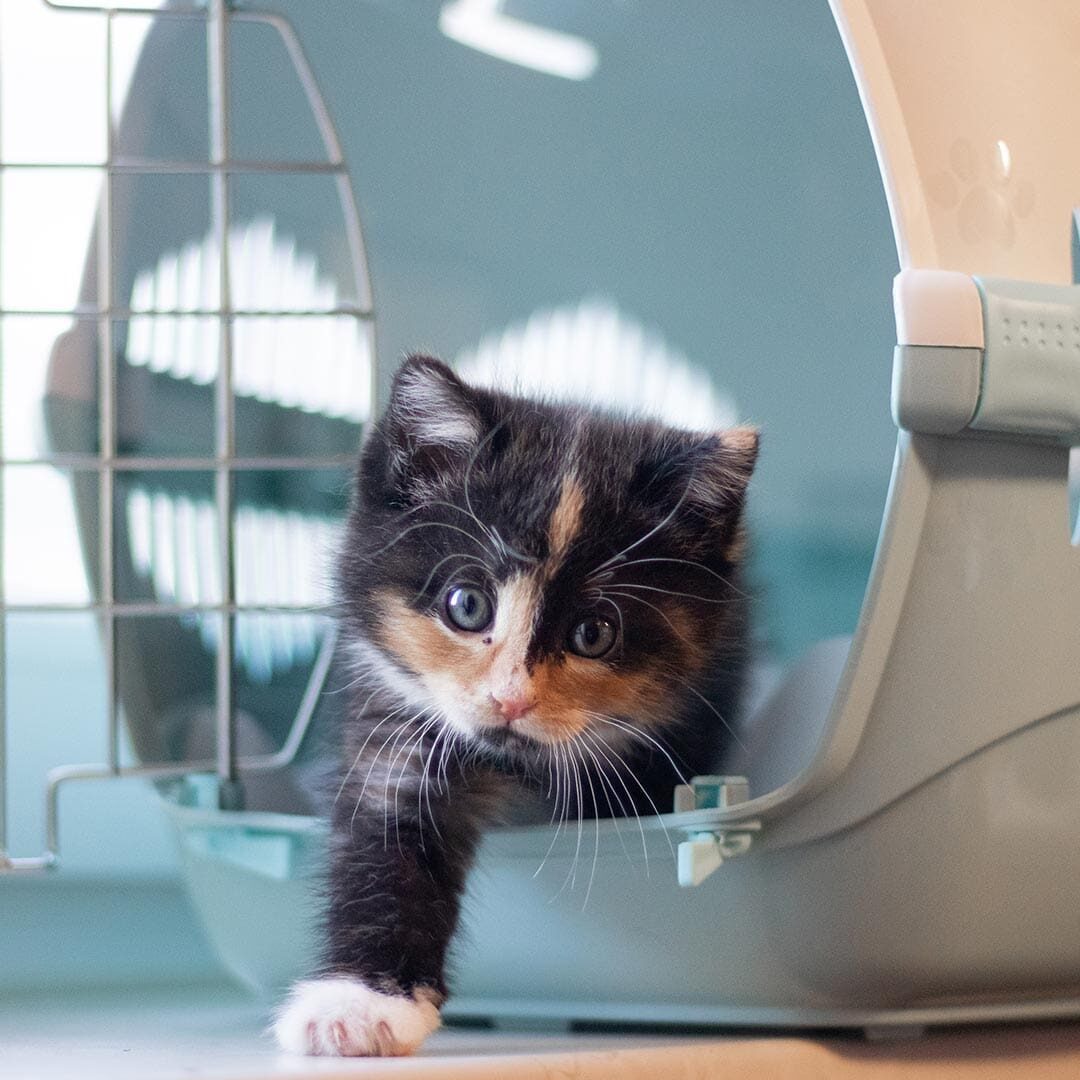
- Carrier training
- Fear of travel or new environments
- Comfort with handling and routine care
- Preparing for veterinary visits
- Adjusting to a new pet, baby, family member, or household routine
- Building confidence and enrichment skills
Training can also be helpful when you are not experiencing a specific behavior problem. Teaching your cat cooperative handling, carrier skills, and other positive behaviors can make daily routines easier while providing mental stimulation.


How Does Cat Behavior Modification Work?
Behavior modification focuses on changing how a cat responds to a particular situation or trigger. Instead of simply trying to stop an unwanted behavior, training looks at why the behavior may be happening and teaches your cat alternative responses.
At Synergy, we use positive reinforcement and reward-based training rather than punishment-based methods. Your trainer will help you identify realistic goals, make appropriate changes to your cat’s environment, and practice skills in manageable steps.
The training plan will depend on your cat and the behavior being addressed. A cat who is afraid of their carrier, for example, will need a different approach than a cat who is having difficulty adjusting to another pet in the household.

What Happens During Synergy's Cat Training Program?
Your cat's training program begins with an onboarding call with our Behavior Technician and Animal Trainer, Jennie Fiendish. This conversation allows us to learn about your concerns, your cat's history, and what you would like to accomplish through training.
Your program includes:
- A customized onboarding call
- Six private training sessions with one of our experienced trainers
- An individualized training plan
- Training resources selected for you and your cat
- Step-by-step guidance for practicing skills between sessions
Training sessions typically take place every one to two weeks. Sessions begin virtually and may transition to in-person training when appropriate for you, your cat, and your trainer.
Working virtually at the beginning can also allow your trainer to observe your cat in their normal home environment, where many behavior challenges occur.


How Much Does Cat Training Cost?
The initial onboarding call is $110.
Individual training sessions are $125 per session, or you can purchase a package of six sessions for $660.
Because each cat learns at their own pace, the amount of training needed will depend on your goals, the behaviors being addressed, and your cat's response to the training plan.
Does My Cat Need Training or a Veterinary Behavior Assessment?
Some behavior concerns can be addressed through training alone. Others may involve medical conditions, significant fear or anxiety, aggression, or more complex behavioral concerns that benefit from evaluation by a veterinarian trained in behavior.
Your trainer will help determine whether your cat's needs fall within the scope of the training program. If additional evaluation is recommended, we may refer you to Synergy's Cat Behavior Health Assessment service with our veterinary behaviorist.
A behavior health assessment allows the veterinary behavior team to consider your cat's physical health, behavioral history, environment, and potential medical contributors when creating a treatment plan.
Helping You and Your Cat Build Better Everyday Habits
Living with unwanted cat behavior can affect everyone in the household. Training gives you a structured way to understand what your cat is communicating, teach new skills, and make changes that support more comfortable interactions.
Whether you want help with a specific behavior or simply want to make handling, travel, veterinary visits, or other routines easier for your cat, our team can develop a training plan built around your goals.
Fill out our Cat Training Questionnaire below, or contact our team to get started.
Frequently Asked Questions About Cat Training
Yes. Cats can learn behaviors through consistent, reward-based training. Training can teach practical skills such as entering a carrier, accepting handling, using appropriate scratching surfaces, and participating more comfortably in routine care. Behavior modification can also help cats develop different responses to situations that cause fear, frustration, or stress.
Cat training may help with litter box problems, scratching, carrier anxiety, handling difficulties, fearful behavior, aggression, introductions to other pets, changes in household routines, and other everyday behavior challenges. Your trainer will determine whether your cat's concern is appropriate for training or should first be evaluated by a veterinarian or veterinary behaviorist.
Training and behavior modification may help with some forms of aggression, but aggression can have several underlying causes. Cats showing significant aggression, fear, or sudden behavioral changes may need a veterinary behavior assessment so medical and behavioral factors can be evaluated together.
No. Synergy uses positive, reward-based training methods. Training focuses on reinforcing desired behaviors, helping cats develop new associations, and modifying the environment when appropriate rather than relying on punishment.
There is no single timeline for every cat. Progress depends on the behavior being addressed, how long it has been occurring, your cat's emotional response, the home environment, and how consistently the training plan can be practiced. Your trainer will help set realistic goals based on your individual cat.
Training may be appropriate for many everyday behavior and skill-building needs. More complex cases involving significant aggression, fear, anxiety, sudden behavior changes, suspected medical contributors, or concerns that require medical treatment may benefit from a veterinary behavior assessment. If you begin with training and your trainer believes additional evaluation would help, they can recommend the appropriate next step.

